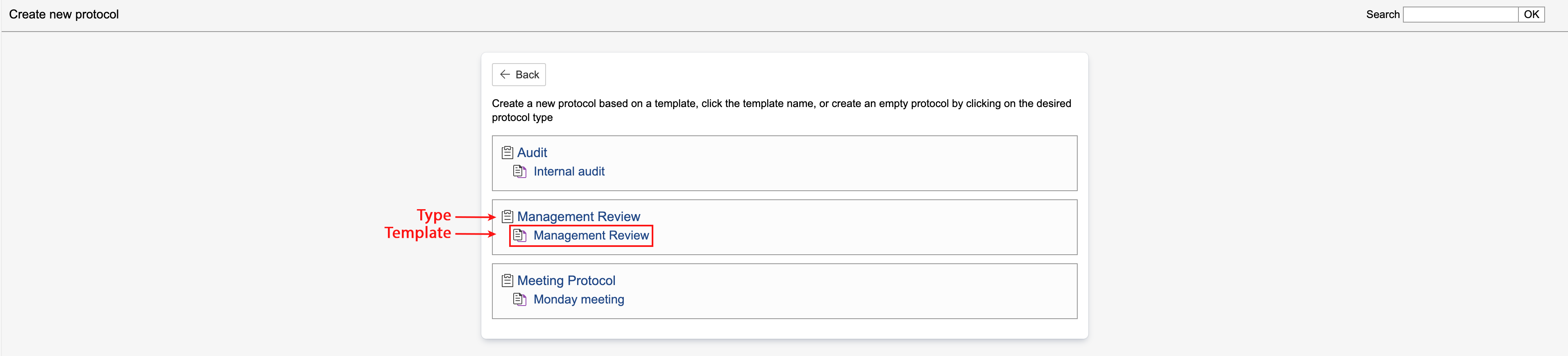
1. To create an auditing and meeting note a protocol based on a template, go to the auditing and meeting note protocol module and click Create new.


2. Select an auditing and meeting note template a template by clicking it.

| Info |
|---|
Info: Auditing and meeting note types have the icon |


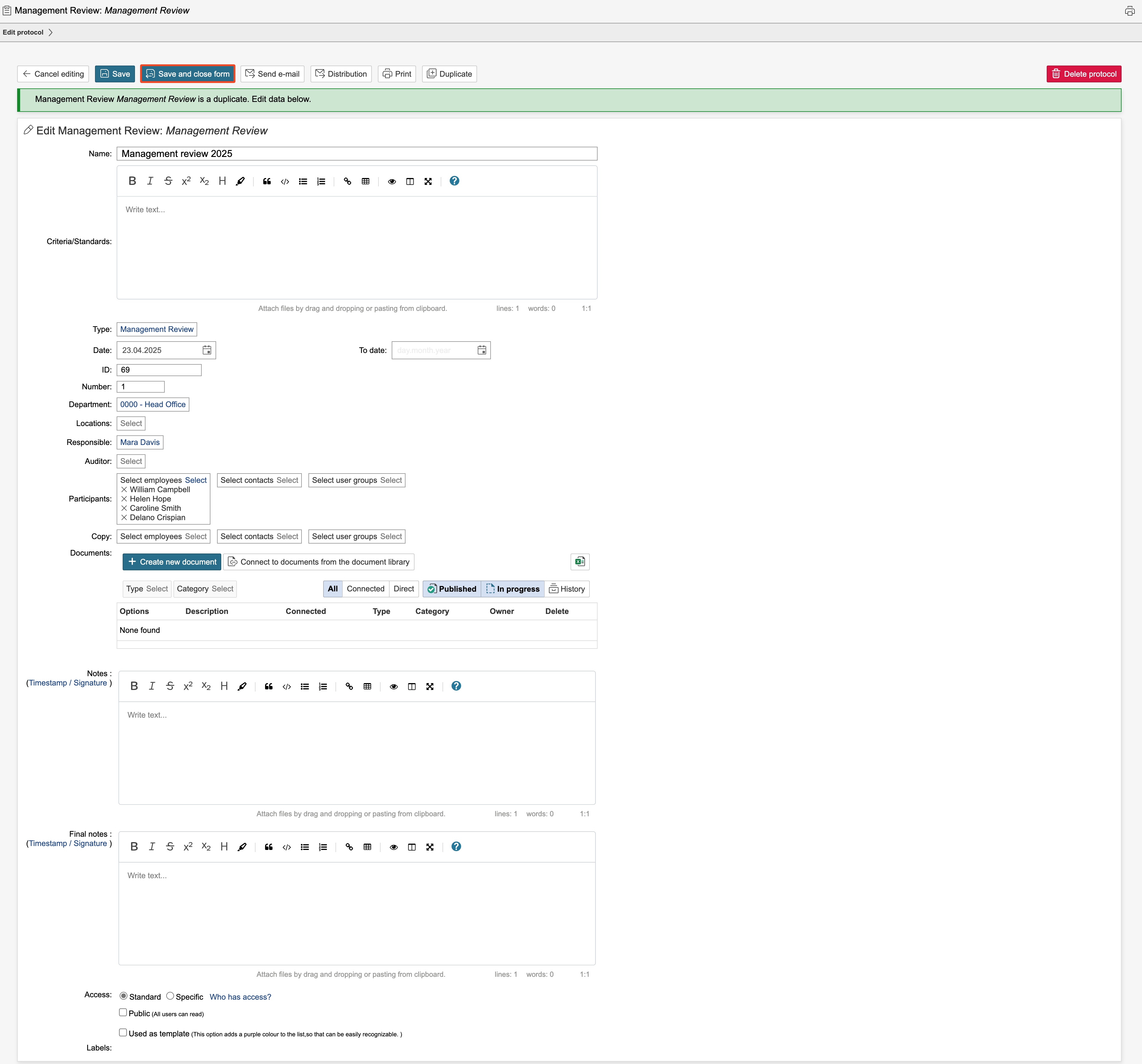
3. Edit the name and any other data, add participants and edit access, if necessary, edit access to the auditing and meeting note. Click applicable. Click Save and close form to access the auditing and meeting note listview the protocol overview.

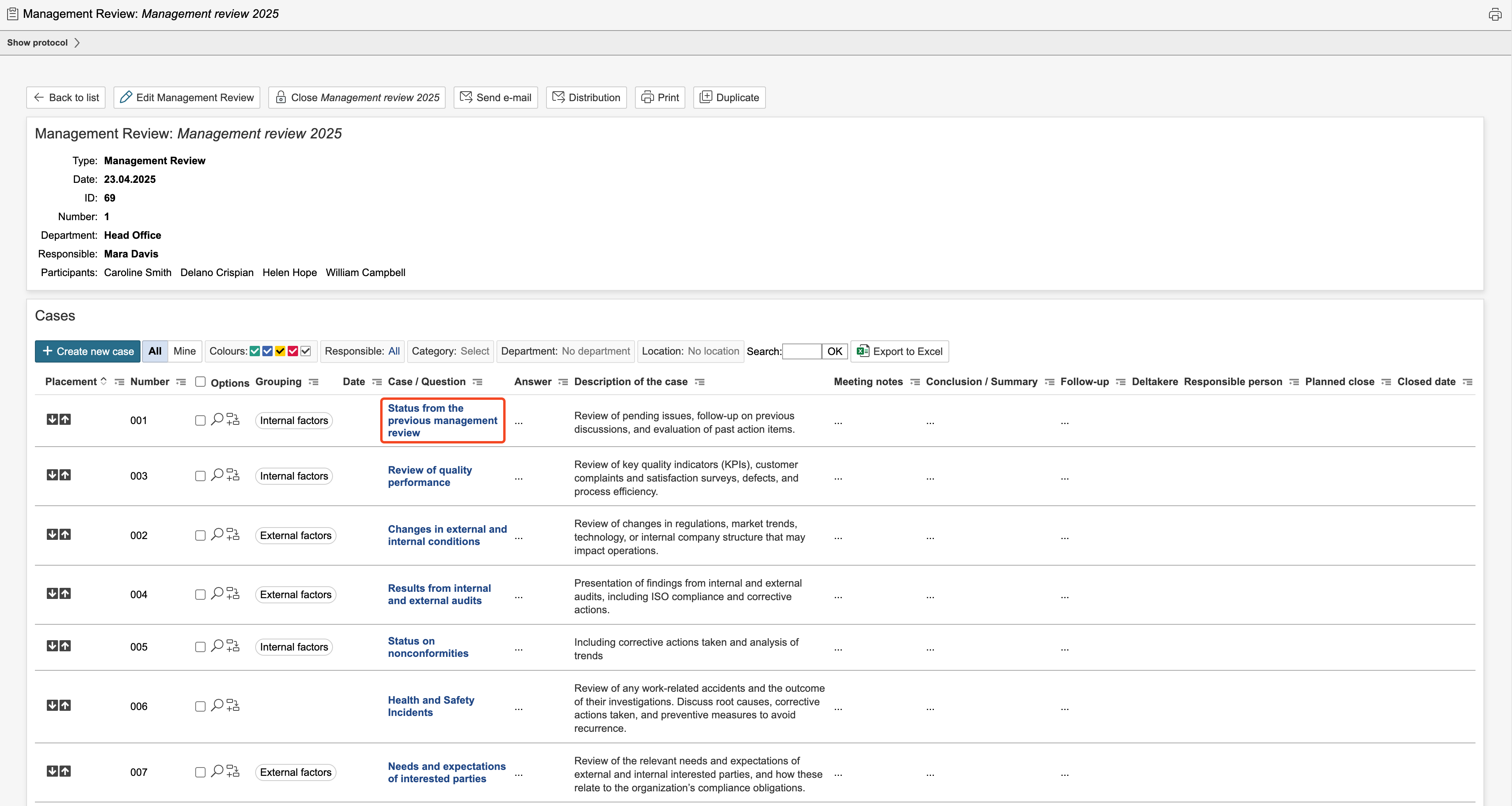
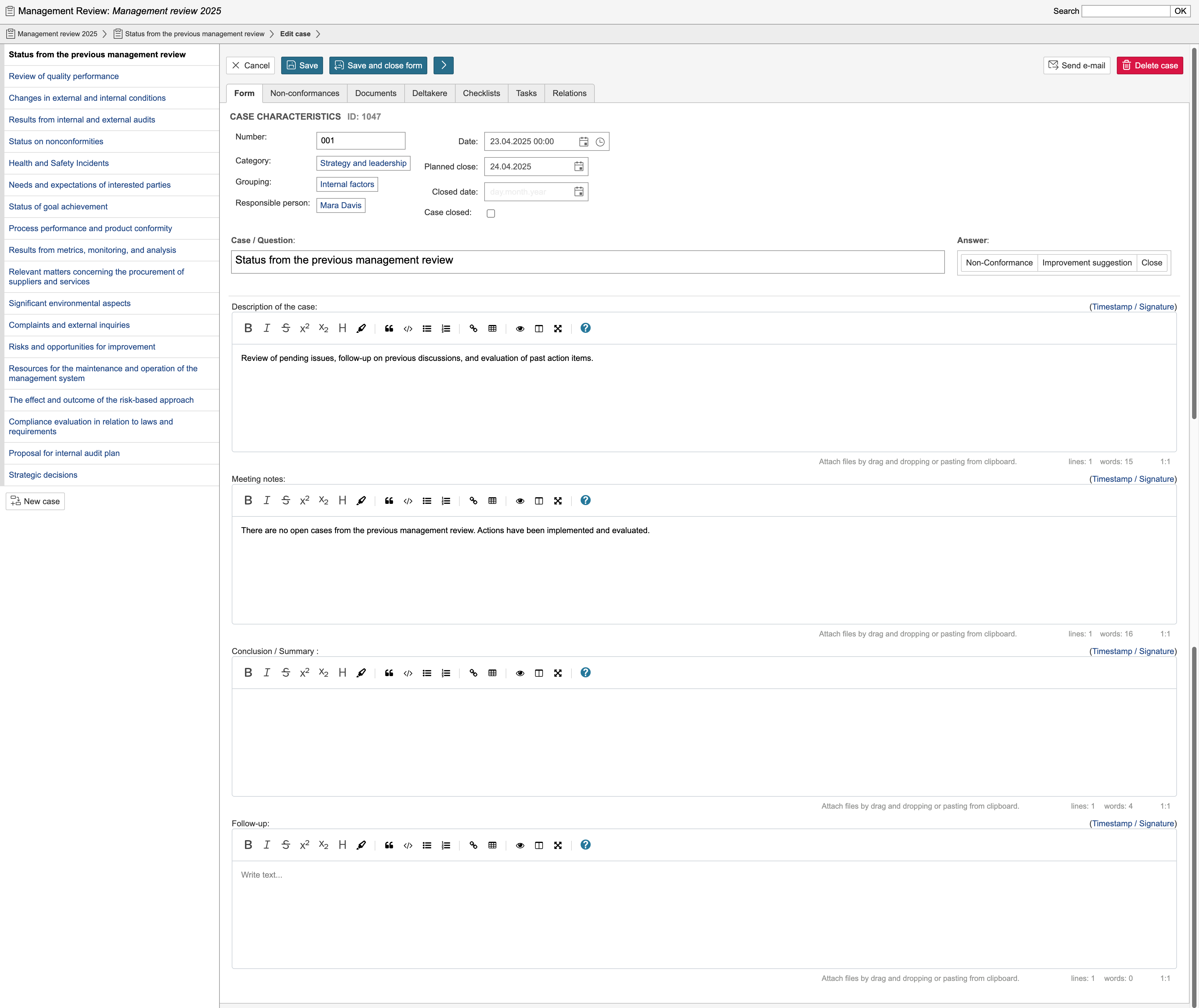
4. Click one of the cases in the case list overview to open and edit a the case.

5. Enter case properties and describe the case and/or decisions made. If the case has been reviewed in full, check Case is closed. To save and move on to the next case, click  .
.

6. When you have reviewed all the cases in the list, click Save and close to access the auditing and meeting note list. If you have multiple cases for the specific review, click New case to create new cases. This does not affect the template from which the auditing and meeting note is created.
Edit case information such as the responsible person, category, group, and planned close date. If applicable, you can also add a description, discussion, and/or conclusion. If answers have been configured, they can be used when handling cases. Certain answers may trigger actions such as closing the protocol case or creating a case in the nonconformity module. Protocol cases can also be linked to data in other modules, if applicable. Click Save or Save and close form to save the changes. To save and move on to the next case, click  .
.

| Tip |
|---|
Tip: It is possible to select configure actions for the various responses answers to the questions and to create and link to records in other modules for the cases. |
The auditing and meeting note list provides a list of the cases' properties and information.
6. Proceed through the list of cases, adding a responsible person, dates, and any additional information if applicable. The colours displayed to the left of each case indicate whether the case is closed, ongoing, or overdue. Green indicates that the case is closed, yellow indicates that the case is ongoing, and red indicates that the case is overdue. The 'Planned Close' field determines the colour for cases that are ongoing or overdue.
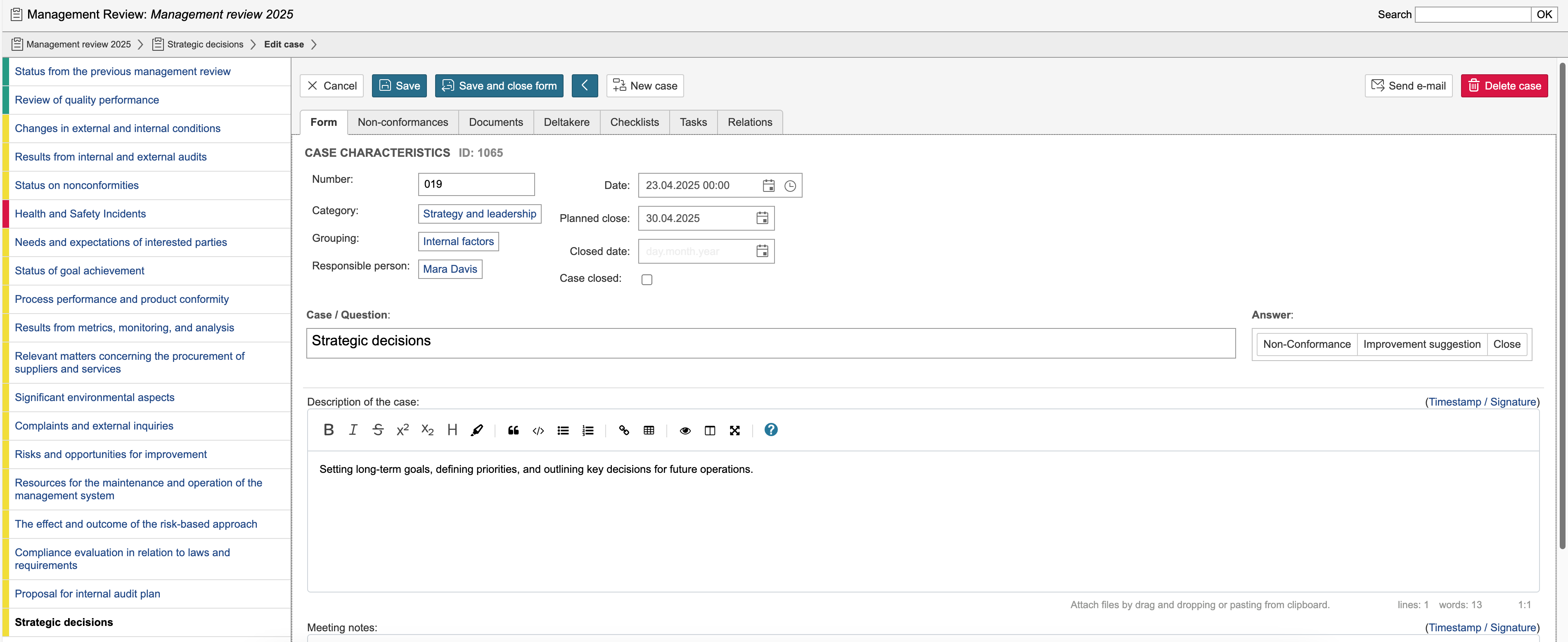
7. If you need to add more cases to the protocol, click New Case. When all cases have been reviewed, click Save and close form to view the protocol overview.

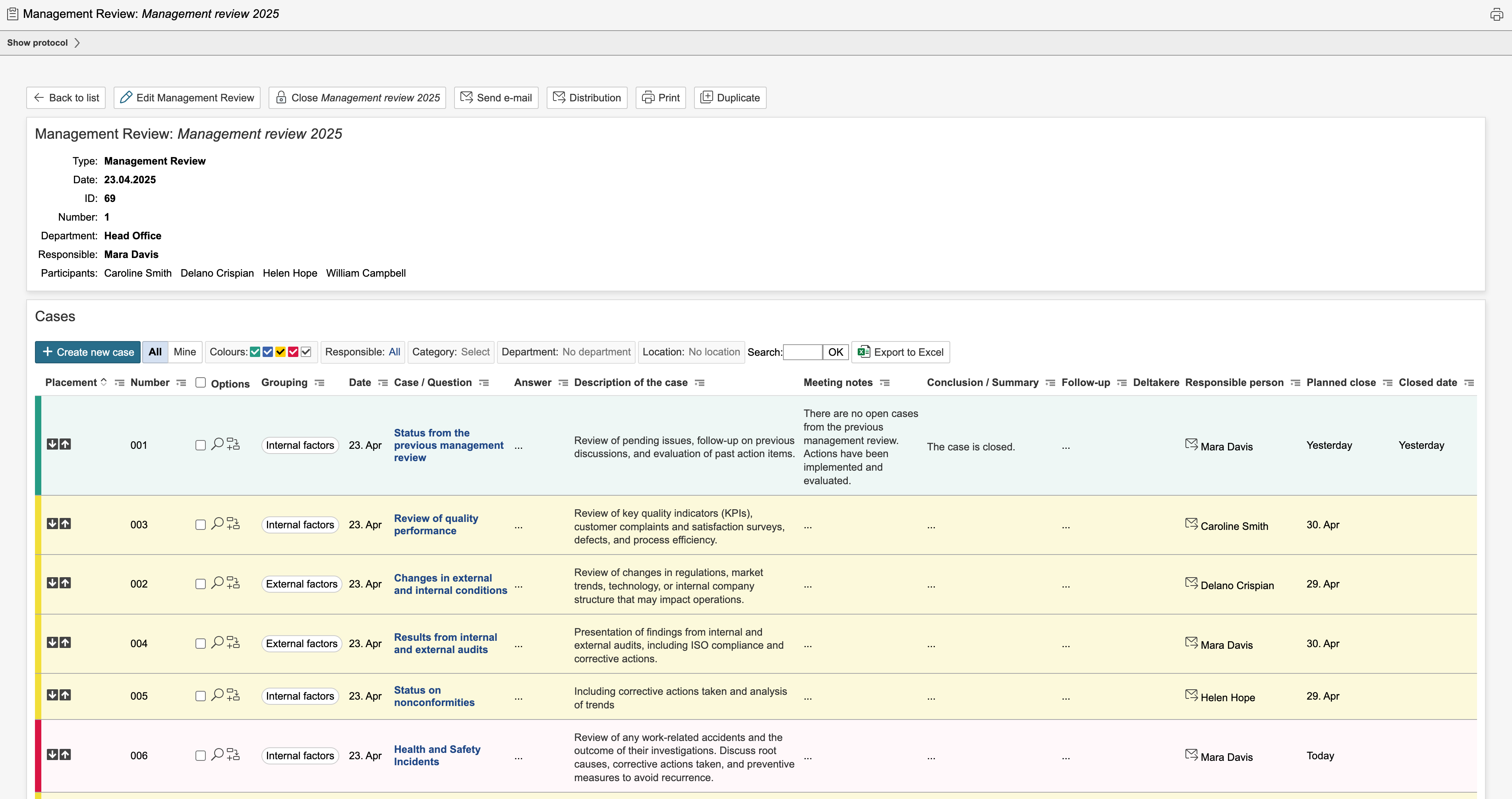
The protocol overview displays a list of cases with their associated information and descriptions.

| Note |
|---|
Note: It is 's not possible to close an auditing and meeting note a protocol until all cases are have been closed. |
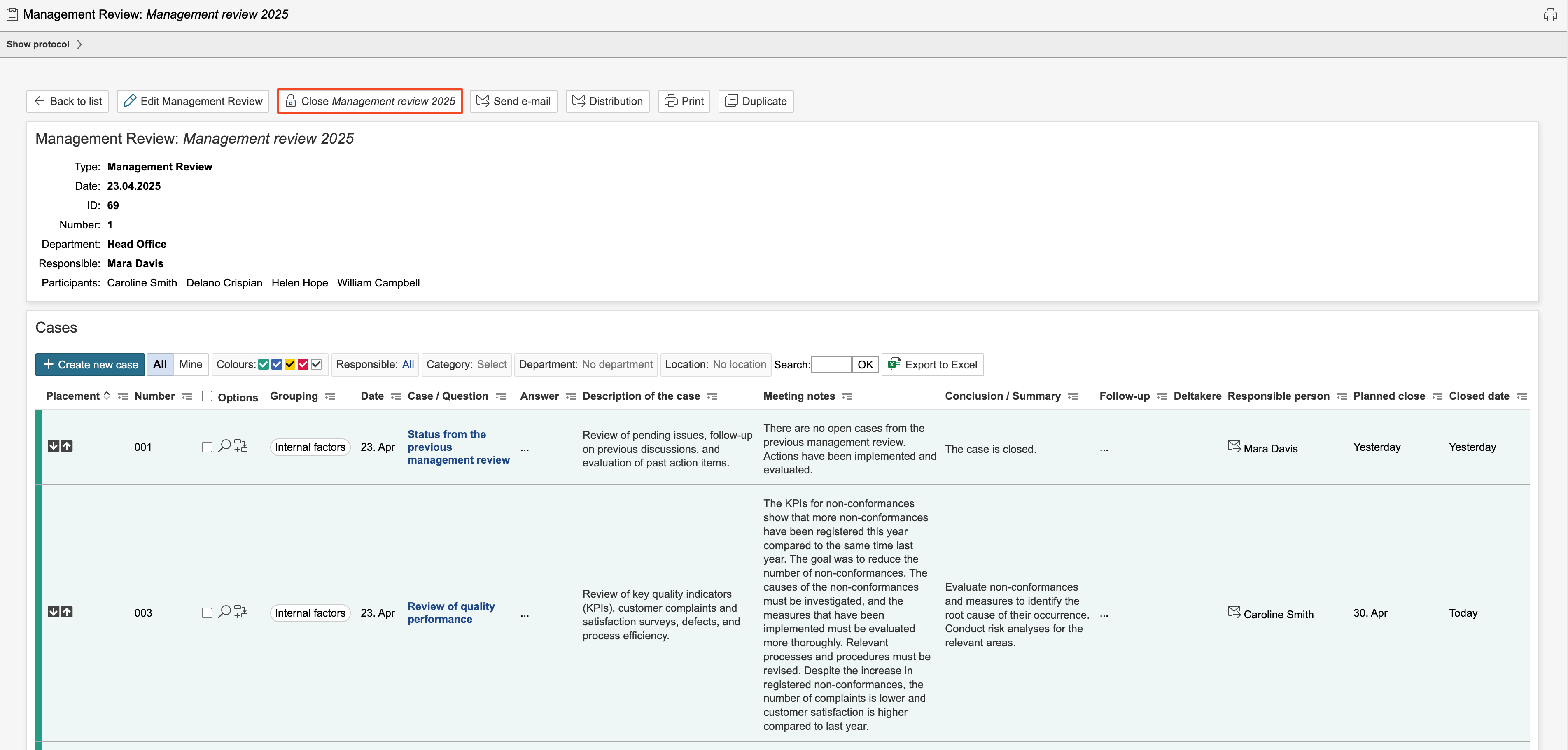
To close an auditing and meeting note, click  Close Auditing and meeting note
When all cases are closed, you can close the protocol. Click 'Close (protocol name)' to close the protocol.