
1. Go to the protocol module and click Create new.

2. Select the type for the protocol by clicking on it.

Info: Protocol types are indicated by  , while templates are represented by
3. Enter a name and fill in any other fields if applicable. Click Save to add participants and documents to the protocol.
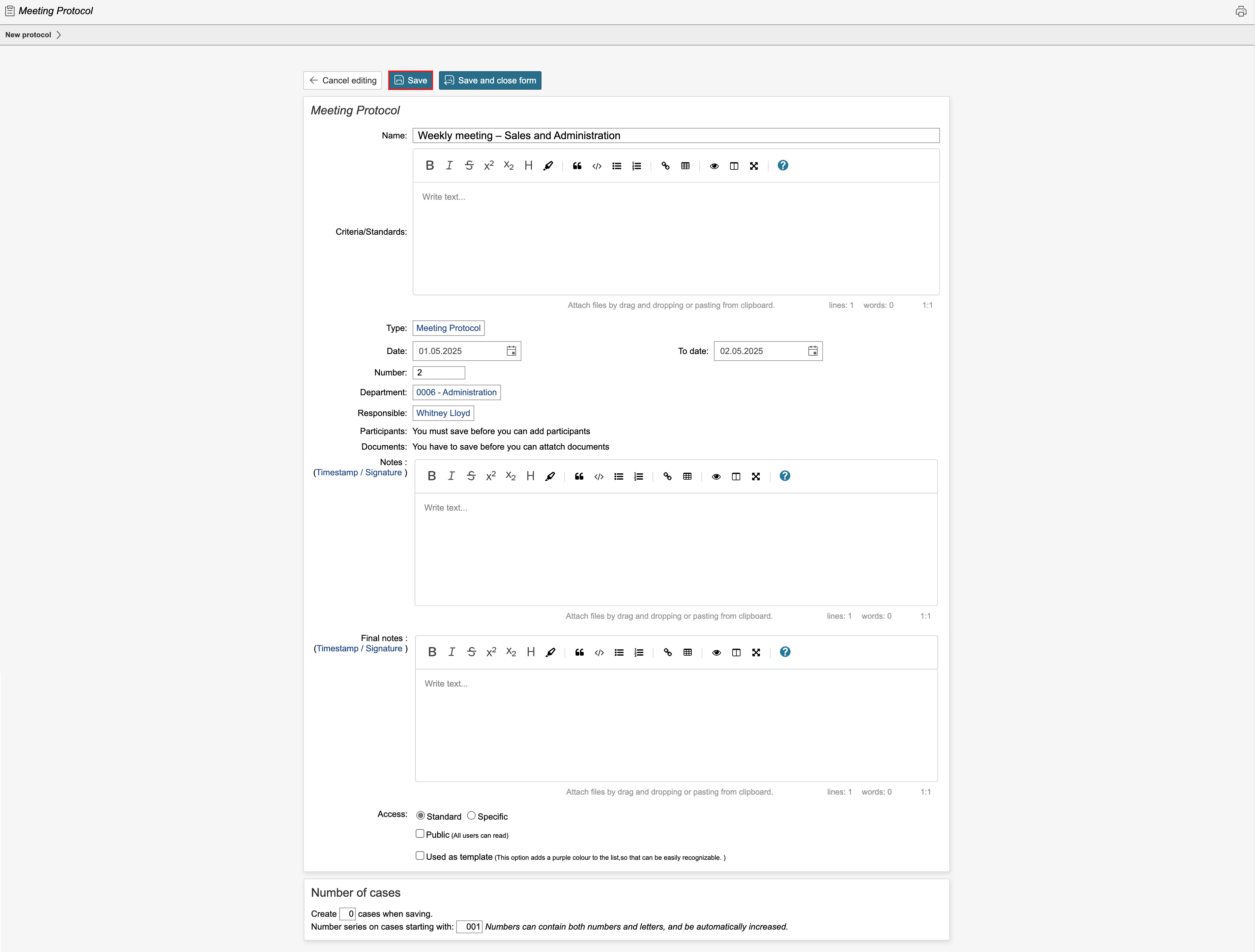
4. If applicable, add participants and documents and click Save. To view the protocol overview or create a case, click Save and close form.

Tip: If the protocol requires strict access control, tick the 'Specific' box in the Access field and select who should have access.
5. To create a new case, click Create new case.
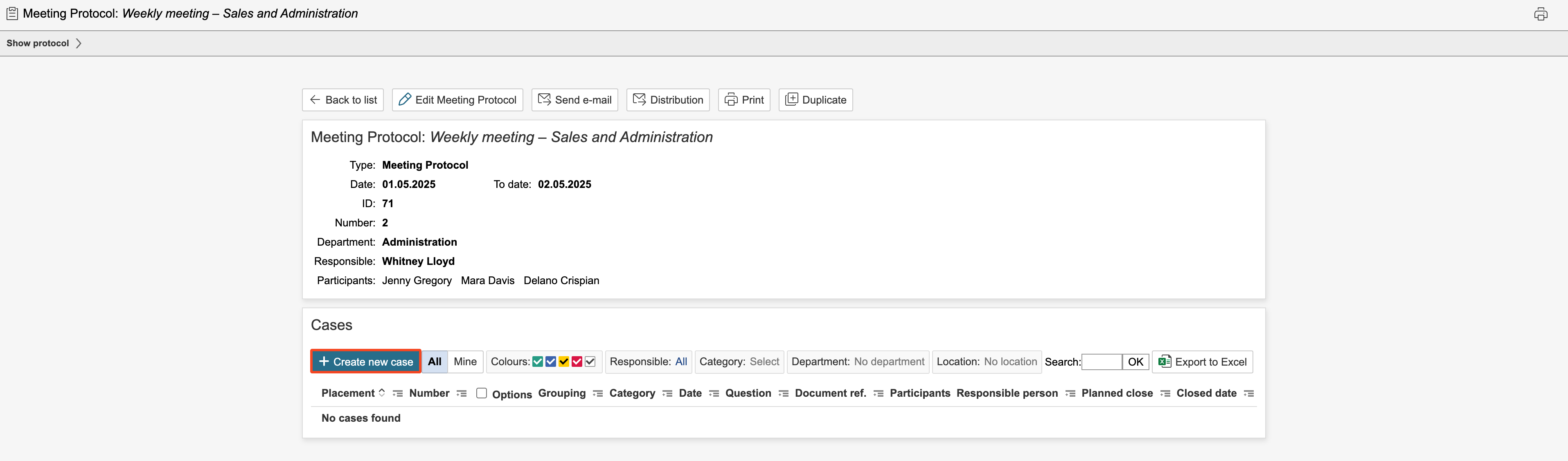
6. Complete the fields for the case and click Save. To save and create a new case, click New case.
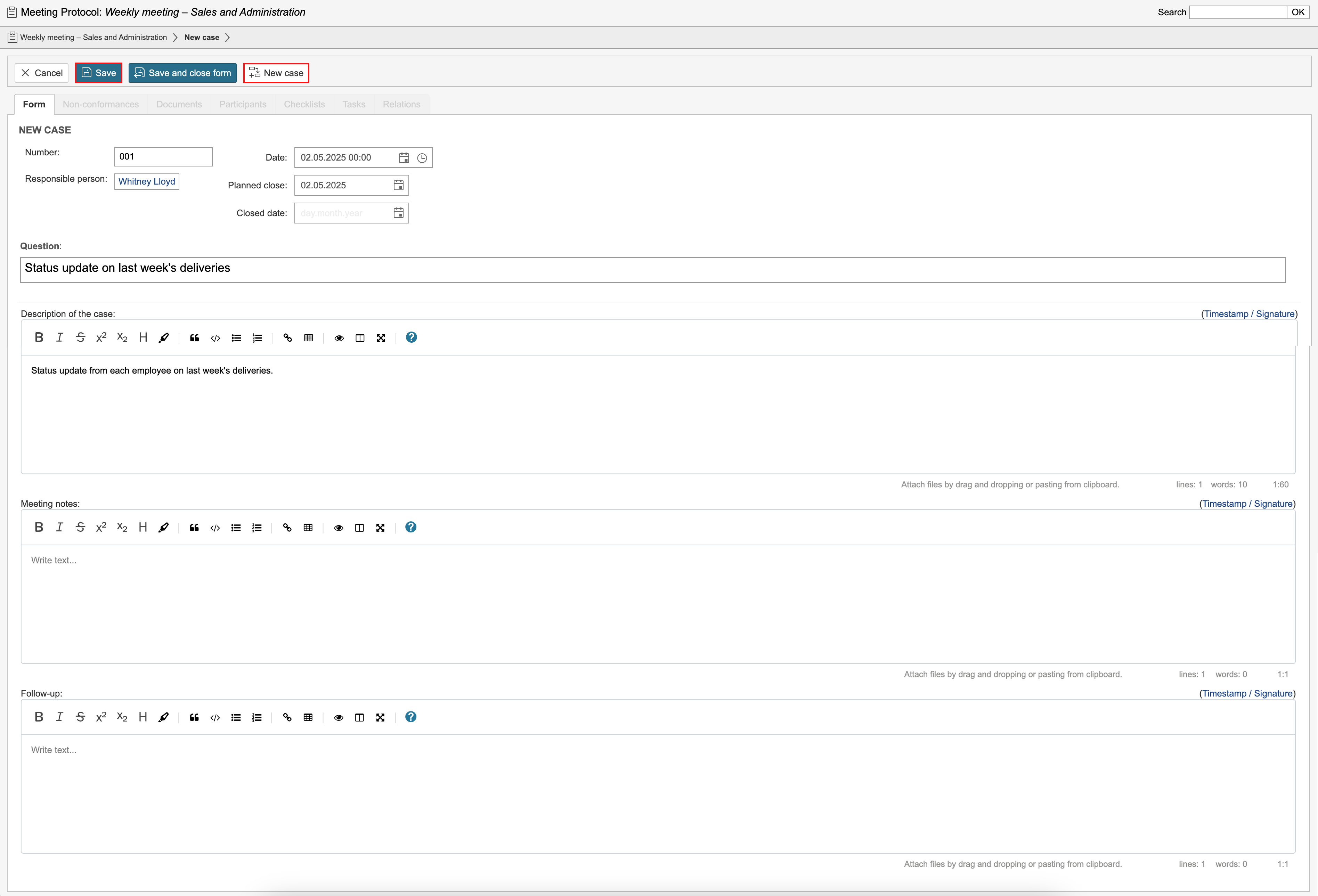
7. Once the information for a protocol case has been entered, you can continue registering additional cases by clicking New Case and filling in the relevant details for each one.

Info: All cases in the protocol are displayed on the left side of the page.
8. If a case has been answered and completed during the meeting, you can close it by ticking Case closed. To continue and a create new case, click New case.

8. When all cases have been created and reviewed, click Save and close form to return to the protocol overview.

9. You can close the protocol once all cases are closed. To do so, click Close [protocol name].

Info: Closed protocols are marked with  in the protocol overview.
Protocols with cases where the planned date has been passed appear red in the auditing and meeting note module's list. Auditing and meeting notes with cases that have a planned closure date in the future are yellow in the list. Auditing and meeting notes with cases where all cases are closed are green in the list. Auditing and meeting notes with cases with no planned closure date are white in the list.
