Purpose
This document aims to help guide Timmaniacs when a user contacts Cuha to get help to gain access to their account. This document also covers the case for when a user is unable to verify their identity and for when they have lost access to their 2-Factor Verification (2FV) (phone).
💡 Note! The first step should always be that the user uses the “lost password?” button to regain access to their account. This document is only relevant once the user has lost access to their email account.
💡 Note! If the user who lost their password or their 2-Factor Verification method is a us an admin, or if there are multiple admins at the salon, direct the user to ask help from the other admin to deactivate 2FV or help them change their credentials.
Scope
Applies to CuHa, Sales, and for Sole admin users.
Definitions/Acronyms
- Sole admin user : A salon user, where there is only one admin user at the salon
Procedures
Case: The sole admin has forgotten their password and is unable to use the "Forgot Password?" option to recover the account.
Miro board: Flowchart on account recovery process
Ensure that the person reaching out to you is the one who should have access to the account.👀
- Step 1: Does the account have a phone number registered in user information? (Note! Not the salons phone number, but phone number in user settings.)
-> If No, there is no phone number registered in user information proceed to Step 2.
-> If yes, call the number and make sure that the person answering has lost access to their account and is trying to recover it. It is important that we contact the number registered in the account, to make sure that the number has not been spoofed*.
Spoofing is when someone disguises an email address, display name, phone number, text message, or website URL.
If the person answering confirms that they have lost access to their account and want to regain access, we can help them to regain access to their account by updating the email address in their account so they can use the “lost password?” or temporarily set up a new password for them. ✅
If No valid phone: Request that the user verify their identity by submitting additional documents.
To protect the interest of our users and work to keep their accounts secure, we need to request that they can verify their identity. We therefore need to request that they come back to us with additional information that can support their identity verification.
Request that they submit following documents to CuHa via email:
- [ ] 🪪 Picture/scan of their ID card or identity document that clearly states their full name (ask that they conceal any sensitive information such as full social security number.)
- [ ] 📑A copy of their company registration document
- [ ] 🏦 A screenshot from their online bank transaction (showing that they have previously paid the invoice associated with the user account). Should include sum of transaction, their name, invoice reference number, Timmas account number, date of transaction)
Step 3: Check that info matches🔍
Once the documents have been submitted, double check that the name of the id card matches the name in:
- The Timma account
- The company registration document
- Name in the Bank transaction picture
Also control that the reference number and amount in the bank transaction matches the one in their account. See below:
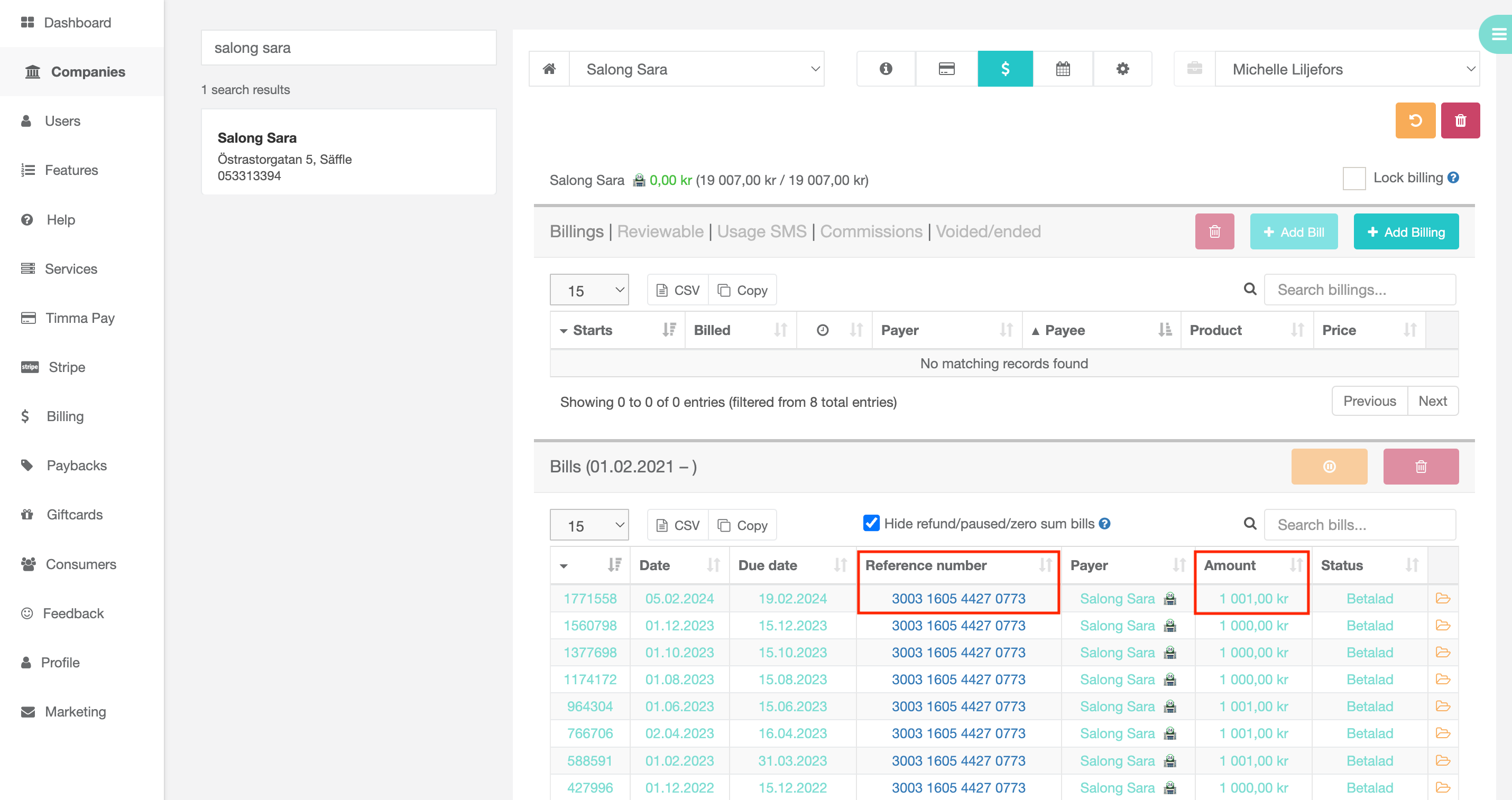
Once we can verify that the person is the same person who should have access to the account, we can help them access their account by updating the email address in their account so they can use the “lost password?” or temporarily set up a new password for them.
Case: Sole Admin previously activated SMS verification but has lost access to their phone.
In this case, the only way for the user to regain access to their account is that they verify their identity by following the instructions in Step 2 above. After confirming that the information submitted matches the information we have, we can disable SMS-verification, which enables them to log in using only email and password.
⚠️ NOTE: Always delete all emails containing images and documents from users after they have been used for user verification.